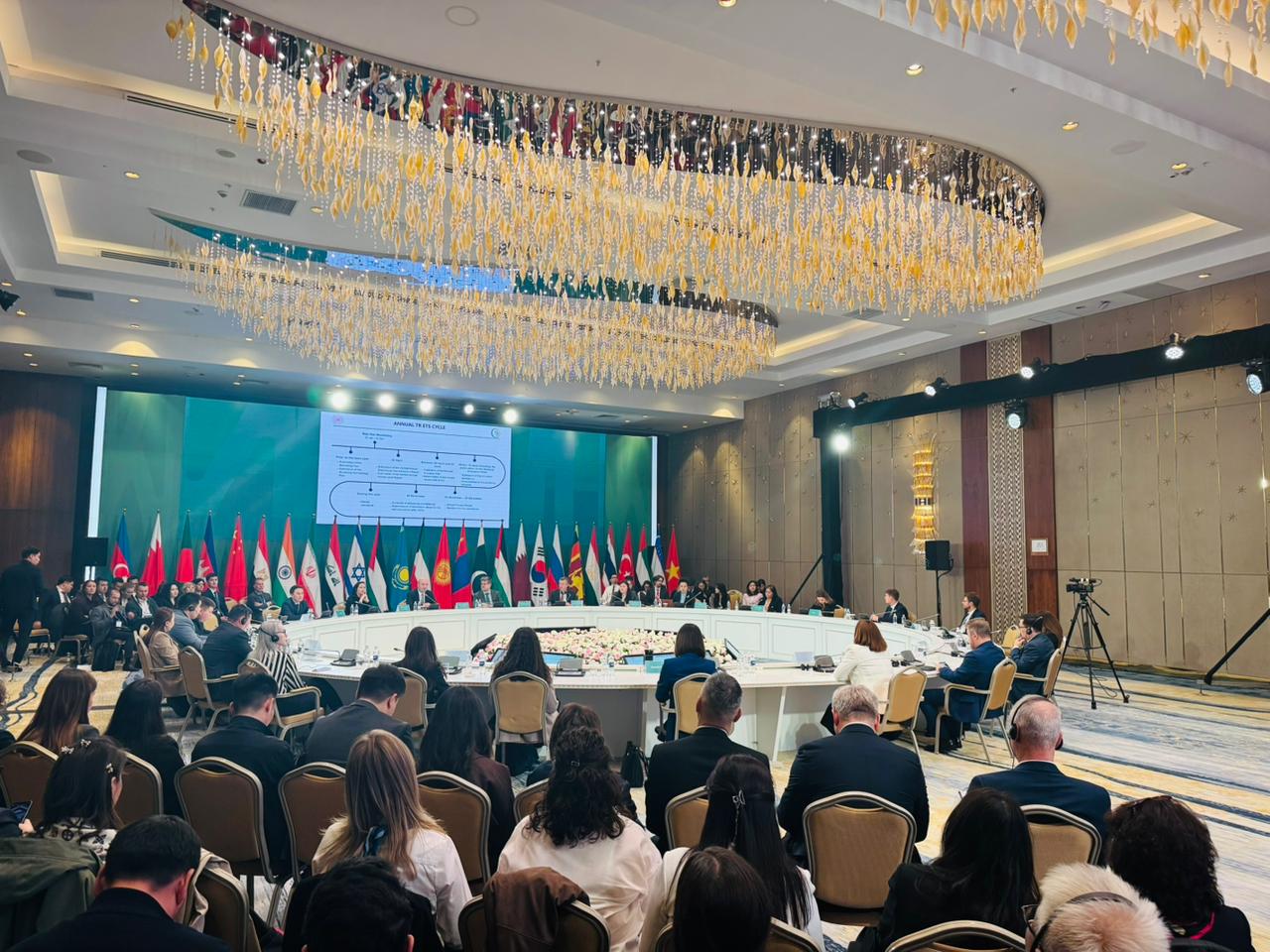
On April 23, 2026, a panel session entitled «Regional Knowledge Exchange on Carbon Pricing and Emissions Trading System (ETS) Reform» was held as part of the Regional Ecological Summit 2026 (RES2026) with the support of «Zhasyl Damu» JSC. Participants discussed key tools for achieving climate goals, international experience, and prospects for developing carbon markets in Central Asia.
The session focused on the role of carbon pricing as a tool for reducing greenhouse gas emissions and attracting climate finance. Experts emphasized that effective carbon markets require robust monitoring, reporting, and verification (MRV) systems that ensure transparency and trust among market participants.
During the session, the experiences of countries participating in the PMI initiative were presented. Turkey demonstrated the importance of preliminary institutional and regulatory preparation for the launch of an ETS. Brazil demonstrated the potential of a national carbon market as a tool for mobilizing climate finance. China illustrated the potential for scaling the system with a gradual expansion of coverage. South Africa's approach, combining a carbon tax with market mechanisms, was highlighted as an effective model for flexible climate policy.
Kazakhstan and Central Asia: A Course Toward Integration
Particular attention was paid to reforming Kazakhstan's emissions trading system. Experts emphasized the need to increase market liquidity, strengthen market incentives for emission reductions, and integrate the national system with international mechanisms, particularly Article 6 of the Paris Agreement. This opens up additional opportunities for attracting investment and enhancing the environmental integrity of projects.
Within the broader regional context, Central Asian countries have significant potential for cooperation on carbon pricing. Knowledge sharing, institutional capacity building, and coordinated approaches can contribute to the development of effective carbon markets in the region.
The Green Climate Fund (GCF) also presented its position at the session. Discussions included the role of carbon pricing in mobilizing climate finance, the potential for integrating Article 6 of the Paris Agreement into national systems, and potential support for Central Asian countries in developing carbon markets.


 EcoQolday
 Check payment
 Login to the system

 share
share